
The Hidden Superpower of Early Childhood Education and Care Agencies: Effective Data Reporting

In the ever-evolving landscape of early childhood education and care (ECEC), data is more than just numbers—it is a powerful tool for transformation. When used effectively, data can illuminate challenges, guide policy, and drive meaningful improvements for children, families, and providers. This blog explores how integrated data systems and intentional analysis can turn insight into action across the ECEC ecosystem.

ECEC systems are often fragmented, with billions of dollars flowing through siloed funding streams. A high-quality data collection plan helps bridge these gaps by:

  • Meeting federal reporting and accountability requirements
  • Informing evidence-based policy changes
  • Guiding targeted resource allocation
  • Shaping training priorities and staffing decisions
 

As Peter Drucker famously said, “You can’t improve what you don’t measure.” In today’s world of ECEC, this could not be more true.  

What are the primary systems for collecting early childhood education and care (ECEC) Data?

Three primary systems form the backbone of ECEC data infrastructure:

  1. State Child Care Data Systems: Systems developed in the states to manage provider licensing, CCDF subsidy, PreK, workforce professional development and quality improvement initiatives.  
  2. Early Childhood Integrated Data Systems: ECIDS enable cross-sector collaboration and real-time data sharing across agencies.
  3. Statewide Longitudinal Data Systems (SLDS): SLDS connect and track children from early education through K–12, postsecondary, and into the workforce.

Together, these systems create a comprehensive view of child development and program effectiveness

how do we move from data collection to actionable insights?

To move from data collection to actionable insight, ECEC leaders can follow a six-step framework:
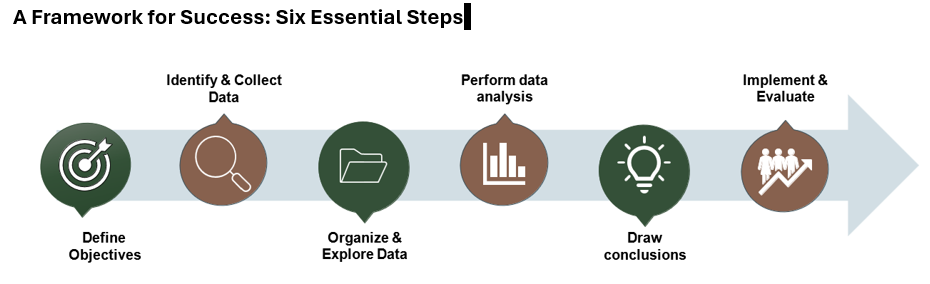
Define Objectives: Start by asking, “What decision do I want to make, and what data do I need to make it well?” This prevents the common trap of collecting data without purpose.

Identify and Collect Data: Focus on actionable insights rather than comprehensive data dumps. Not all data is equally useful, prioritize information that can drive change.

Organize and Explore: Look for trends, patterns, and red flags. Use federal and state comparative data to benchmark against standards and identify outliers.

Perform Data Analysis: Maintain objectivity and avoid confirmation bias. Context matters, the same data point might mean different things in rural versus urban settings.

Draw Conclusions: Create shared understanding among stakeholders. Data-driven conclusions can lead to objective, evidence-based policies that transcend political preferences.

Implement and Evaluate: Turn insights into action, then measure results. Use outcomes to refine approaches and identify new questions for investigation.

In addition, functional data use in administration can lead to tangible improvements:
  • Complaint data → Targeted technical assistance
  • Inspection reports → Legislative advocacy
  • Staffing trends → Workforce development
  • Compliance tracking → Support for struggling providers
 

Real-Life Examples in Action

Picture this: You are a state early childhood policymaker facing a critical decision. A cluster of providers in two counties has experienced a spike in food handling violations over the last six months. Three providers are on their second violation notice, and your licensing staff is concerned about a broader pattern. Meanwhile, 70% of families in your state cannot find infant care slots, with wait lists stretching 8-12 months. In another region, you have identified 23 “child care deserts” where supply meets less than one-third of demand.

Here are some ways you could use data to assess the situation and inform decisions. 
  • Food Safety Violations: Examine the trend in training costs for any correlation with increased food safety violations Identify specific violation trends to target interventions that address the problem.
  • Infant & Toddler Care Shortages: Use licensing demographic data to advocate for investment to expand capacity.
  • Child Care Deserts: Map gaps in supply and demand and addressing access issues through strategic investments.

TCC Experts at the 2025 NARA Licensing Seminar

Our own ECEC Thought Leaders, Lisa Bellach, Dawn Downer, and Lacey Kottkamp, are leading a session, Turning Insight into Action: Advancing Child Care Through Data, at the 2025 NARA Licensing Seminar on September 15, 2025. Follow along for key insights as we connect with states and spark meaningful conversations about data collection and reporting.